In his keynotes, he connect art, technology and entrepreneurship to help organizations navigate profound transformation. The central question is always the same: how do we remain human, creative and relevant in a world that is becoming faster, more digital and increasingly autonomous.
Depending on the context and audience, he can focus on four complementary themes:
The Future of Photography in the Age of AI
Photography is experiencing its most profound transformation since the invention of the camera. With AI, images can be generated without a lens, a moment or a physical referent, challenging traditional ideas of reality, authorship and truth.
This keynote explores how AI expands photography from capturing the world to constructing images. It examines the evolving role of the photographer as author and curator, and the growing importance of intention, context and ethics. Photography emerges as a hybrid practice in which human vision and imagination intersect with intelligent systems, redefining the meaning and value of images in the age of AI.
The Impact of AI on Creativity and Creatives
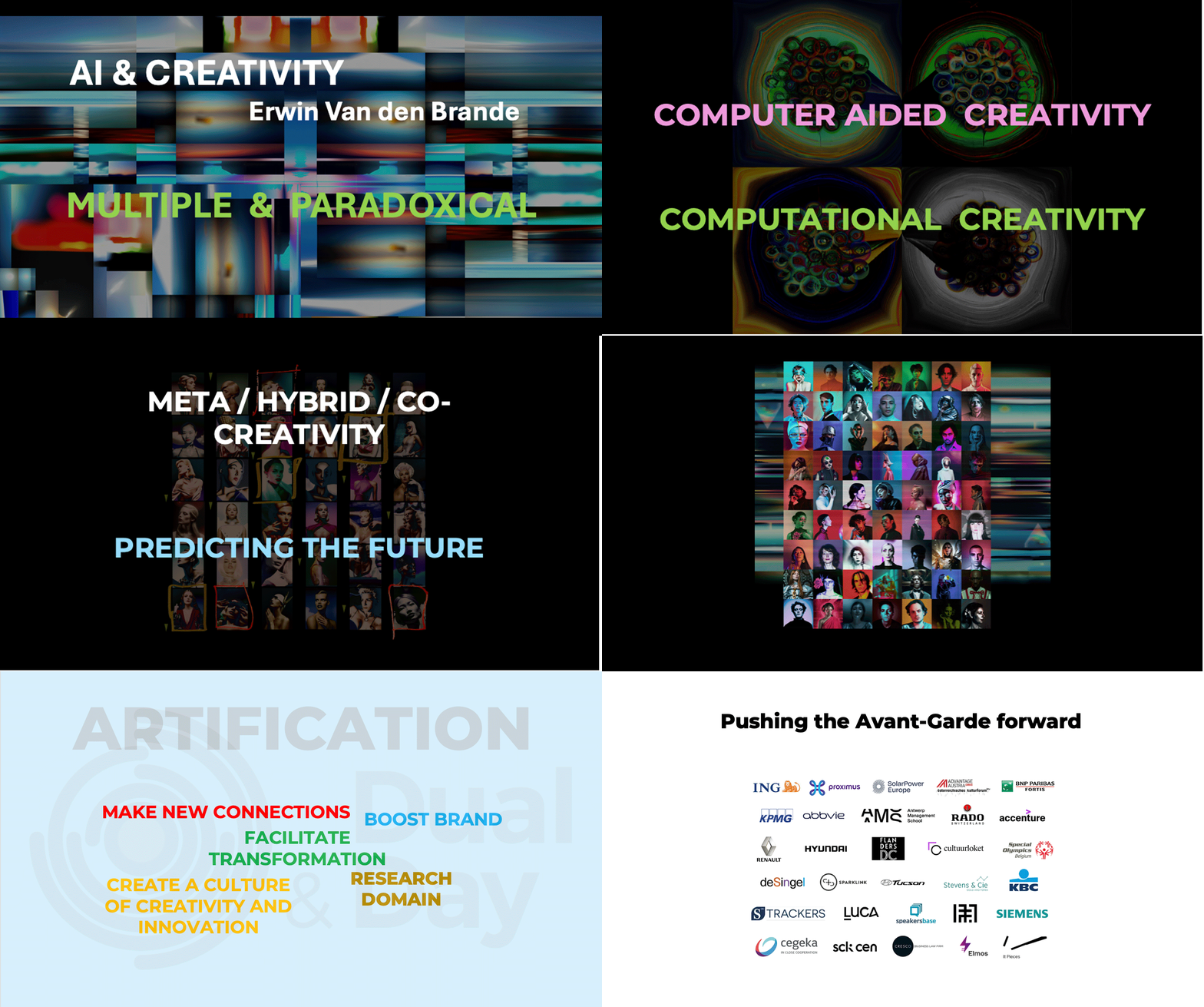
Artificial intelligence marks a fundamental tipping point in how creativity is produced and valued. In this keynote, he explores new forms of creativity such as meta creativity, hybrid creativity and co creativity between humans and intelligent systems. The focus is not on technology itself, but on what creativity means for leadership, innovation and identity in an AI driven world. Creativity emerges as a strategic core capability for organizations that want to remain relevant, resilient and future proof.
Art as a Mindset for Organizations
Artification approaches art not as decoration, but as a way of thinking and working. In this keynote, he shows how collaboration with artists can strengthen organizations on multiple levels. Artistic partnerships can support branding by adding meaning and authenticity, help build new connections with audiences and ecosystems, and stimulate innovation by introducing radically different perspectives.
Artists also act as critical thinkers who question dominant logics and taken for granted assumptions. By applying artistic processes such as imagination, experimentation and reflection, organizations gain new insights into leadership, team dynamics and organizational culture. Artification thus becomes a strategic instrument for renewal beyond efficiency and optimization.
Art & Technology: The New Renaissance
This keynote places art at the heart of technological change. He discusses how artists collaborate with scientists and technologists around AI, VR, robotics and other emerging technologies, and why this cross pollination is essential for our future. Art functions here as a critical research practice that reflects on ethics, human values and direction, in what is often described as a new renaissance.
Each keynote can be adapted in length, focus and depth, and is supported by examples, cases and visual references. They are suitable for leadership teams, innovation and transformation programs, conferences, and cultural or academic contexts.